Best overall for Saudi marketers: Snip. Best for occasional links: TinyURL. Best for campaign organization: Bitly. Best for account-free shortening: is.gd. This 2026 guide compares the workflows, trade-offs, and checks that matter before you share a shortened link.
- Snip is the best free URL shortener for Saudi marketers who need local hosting and link analytics.
- TinyURL suits occasional shortening; Bitly suits campaign organization; is.gd suits account-free use.
- Separate free link allowances from access to QR codes, custom domains, and analytics.
- Test redirects and source tracking before sharing links through WhatsApp or printed QR codes.
Why this matters
A short link is part of your publishing infrastructure. Once you share it in WhatsApp or print its QR code, correcting the destination or replacing the link becomes a separate operational task.
What makes the best free URL shortener
- Usable allowance: The monthly creation limit fits your publishing schedule.
- Recognizable identity: The domain helps readers identify the sender.
- Useful measurement: Reporting answers a specific campaign question.
- Destination control: Editing requirements are clear before publication.
- Data handling: Hosting and privacy terms fit your organization.
- Simple workflow: Creating and checking a link requires little effort.
Free URL shorteners at a glance
Choose by workflow, not by the longest feature list. For a 2026 comparison, distinguish a tool's overall capabilities from the features included in its current free account.
| Tool | Best for | Standout feature | Key limitation |
|---|---|---|---|
| Snip | Saudi marketing teams | Saudi hosting, URL shortening, QR codes, and link analytics | The stated free allowance is 10 links per month; check feature entitlements separately |
| TinyURL | Occasional link sharing | A direct shortening workflow | A shared short domain does not identify your own business |
| Bitly | Organizing campaign links | Link management alongside shortening | Account features and limits need checking before you design a workflow around them |
| is.gd | Account-free shortening | Creating short links without registering | A basic shortening workflow is not a substitute for campaign management |
No single free tool wins every use case. A suitable choice for a one-off message is not automatically suitable for links that appear across printed materials, customer communications, and recurring campaigns.
1. Snip: best free URL shortener for Saudi marketers
Snip combines URL shortening, QR codes, custom domains, and link analytics for marketers and developers in Saudi Arabia. It is hosted inside the Kingdom and described as PDPL compliant, making local hosting a concrete selection criterion rather than an assumption.
Best for: Saudi teams choosing a link shortener with local hosting and marketing features.
The stated free allowance is 10 links per month. Treat that as a creation budget: count how many distinct campaign links you need before choosing your account workflow. The allowance alone does not establish which additional features your account includes.
Pros:
- Saudi hosting addresses a specific data-location requirement.
- URL shortening and QR codes support digital and printed distribution.
- Custom domains provide an option for branded link identity.
- Link analytics support measurement beyond simply creating a redirect.
Cons:
- The monthly free allowance sets a ceiling on new-link creation.
- The stated allowance does not establish free access to every listed feature.
For a Saudi business choosing in 2026, local hosting is a meaningful differentiator. It does not replace your own review of what information the service processes, who can access the account, or how your organization uses click data.
Verdict: Buy into this workflow if Saudi hosting and the stated monthly allowance match your requirements.
2. TinyURL: best free URL shortener for occasional sharing
TinyURL creates shortened links that redirect readers to a destination you provide. Its straightforward shortening use case suits someone who needs to tidy a long address rather than build a campaign-management process.
Best for: Occasional links in messages, documents, or informal communications.
The appeal is a narrow task: enter a destination and produce a shorter address. Keep the decision equally narrow. If your requirements include team access, branded domains, or reporting, verify those requirements separately instead of assuming they follow from basic shortening.
TinyURL pros:
- The core workflow focuses on shortening a destination URL.
- A compact address is easier to place in a message or document.
- It suits a task that does not require a broader campaign setup.
TinyURL cons:
- A shared TinyURL domain does not display your own domain name.
- The shortened address hides much of the destination context from readers.
- Basic shortening alone does not establish campaign attribution.
For occasional sharing, add a short explanation beside the link. A sentence describing the destination helps readers decide whether to open it; a short address alone does not provide that reassurance.
Do not choose TinyURL solely because the resulting URL looks tidy. First establish whether you need destination editing or long-term account control, especially if the link will appear somewhere difficult to update.
Verdict: Buy into TinyURL for occasional shortening; skip a broader rollout until your management requirements are clear.
3. Bitly: best free URL shortener for campaign organization
Bitly provides link shortening and link-management tools. It belongs on your shortlist when the task extends beyond making an address shorter and includes keeping campaign links organized.
Best for: Marketers evaluating an account-based link-management workflow.
For a 2026 decision, inspect the current free account before planning reporting or publishing around it. The existence of a feature in the wider product does not establish that it belongs to the free account.
Bitly pros:
- It combines shortening with a broader link-management approach.
- It gives campaign teams a product to evaluate for recurring link operations.
- Its capabilities support a requirements-led comparison beyond URL length.
Bitly cons:
- Free-account limits determine how much of the broader workflow you can use.
- A shared Bitly address does not provide your own domain identity.
- Click reporting does not, by itself, establish completed purchases or enquiries.
Before choosing Bitly, write down the information you need after publication. Total clicks, channel attribution, and completed conversions answer different questions; do not treat them as interchangeable.
A shortener can sit between your audience and your website, but your destination analytics still matter. Keep campaign parameters on the destination URL and verify that they survive the redirect.
Verdict: Hold until the current free account meets your campaign-management and reporting requirements.
4. is.gd: best free URL shortener for account-free use
is.gd provides a straightforward way to shorten a URL without registering an account. It suits a small, immediate task where account administration would add work without solving a requirement.
Best for: Someone who wants a short link without creating another account.
Account-free creation removes a registration step. It does not remove the need to check the destination or decide how you will keep a record of the links you publish.
is.gd pros:
- You can create a shortened link without registering.
- The workflow stays focused on the destination and resulting short link.
- It suits an isolated shortening task without a team-management requirement.
is.gd cons:
- A shared short domain does not carry your business identity.
- Account-free creation does not provide your team with an ownership process.
- A short address still needs surrounding context to explain its destination.
Keep the original destination and the generated address together in your own records. That simple habit matters when someone later asks what a published link was intended to do.
Verdict: Buy into is.gd for account-free shortening; skip it when your priority is a managed team workflow.
How we ranked these free URL shorteners
The ranking prioritizes fit with the stated use case: Saudi hosting, occasional sharing, campaign organization, or account-free creation. It is not a speed benchmark or a claim that every feature mentioned is included in every free account.
The criteria above determine the decision. Start with the monthly allowance and required workflow, then check identity, measurement, destination control, and data handling. A tool that fails a mandatory requirement should leave your shortlist, even if it offers other attractive features.
For your 2026 selection, record the account terms you actually accept. A comparison article should help you ask the right questions, not replace the current service documentation.
Check your workflow before publishing
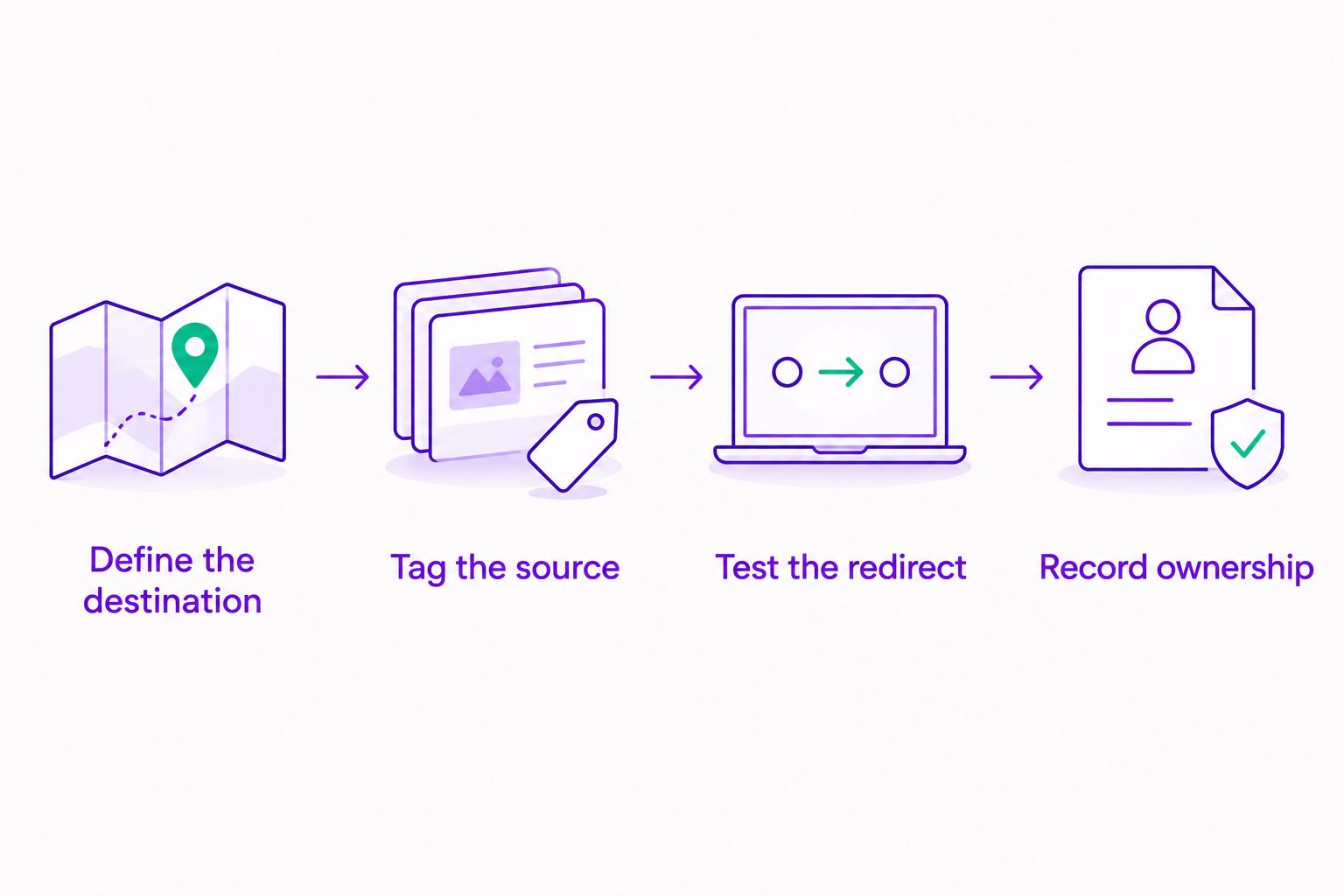
Use this sequence before placing a shortened link in a campaign. The aim is to catch destination and tracking mistakes while replacement is still simple.
Define the destination
Choose the exact page readers should reach. Open it directly first, and confirm that it works without your own login or an existing browser session.
Tag the source
Use a distinct destination tag for each channel you need to measure separately. As a practical rule, use 1 source-specific link per channel when channel-level attribution is a requirement.
A WhatsApp link and a flyer link should not share an undifferentiated destination if you need to compare those sources. Shortening the same untagged URL does not solve that measurement problem.
Test the redirect
Check 3 test contexts: a desktop browser, a mobile browser, and the app where you intend to share the link. This is a recommended check, not a performance claim about any tool.
Confirm the final page and its campaign parameters. If you create a QR code, scan the actual exported artwork rather than checking only the on-screen preview.
Record ownership
Save the original URL, short URL, intended channel, and responsible person. For a printed campaign, also record which artwork contains the QR code so you can identify affected materials later.
Repeat the test after changing the destination or campaign setup. A previously working link is not proof that your latest destination, tracking parameters, or printed artwork is correct.
Which free URL shortener should you choose?
Snip is the best free URL shortener for Saudi marketers who prioritize Saudi hosting and link analytics. Start with the stated creation allowance, then confirm the account includes the particular QR, domain, and reporting features your campaign requires.
Choose TinyURL for occasional shortening, Bitly for a link-management evaluation, or is.gd for account-free creation. Those are distinct starting points, not interchangeable recommendations.
If you remain undecided, write down your non-negotiable requirement before opening another comparison. Local hosting, account-free use, branded identity, and campaign reporting lead to different decisions.
For a Saudi-focused 2026 campaign, create an account and check the workflow against your actual publishing needs before distributing links publicly.
FAQ
What's the best free URL shortener for Saudi marketers?
Choose a shortener whose hosting, monthly allowance, and reporting match your Saudi campaign requirements. The Saudi-hosted option in this guide has a stated allowance of 10 free links per month; confirm access to the additional features you need.
Is TinyURL better than Bitly for simple links?
TinyURL is the more direct shortlist choice here for occasional shortening; Bitly is the choice to evaluate for campaign organization. Check current account requirements before building a recurring workflow around either tool.
Can I shorten a URL without creating an account?
Yes. is.gd supports account-free URL shortening, making it suitable for an isolated shortening task. Keep your own record of the original destination and generated link.
Do free URL shorteners include custom domains?
Do not assume a free account includes a custom domain. Check the account's current feature entitlements and domain requirements separately from its basic shortening allowance.
Can I track WhatsApp links separately from QR scans?
Yes, if you use distinct source-tagged destinations for the WhatsApp link and the QR code. Sending both through the same untagged destination prevents that setup from distinguishing the sources.
Can a shortened link tell me how many sales it generated?
A click count alone does not establish sales. Preserve campaign parameters through the redirect and measure completed purchases or enquiries in your destination analytics.
What should I check before printing a shortened-link QR code?
Scan the exported artwork and confirm that it opens the correct destination. Check tracking parameters, readability at the intended print size, and who controls the underlying link.
One last thing
A QR code encodes a destination; it does not guarantee that destination stays useful. If the code contains a short URL, the redirect becomes part of the printed material's ongoing operation.
Before printing, decide who owns that redirect and what happens when the campaign ends. That decision protects the usefulness of your flyer more directly than shaving another character from the visible link.