Best overall for Saudi-focused campaigns: Snip. Best for existing Bitly workflows: Bitly. Best for basic link shortening: TinyURL. Best for brand-led link management: Rebrandly. This 2026 guide compares the choices by campaign fit, domain control, QR use, analytics, and data handling.
- For best url shorteners saudi arabia searches, Snip wins on Saudi hosting, QR codes, custom domains, and analytics.
- Choose Bitly when keeping an existing Bitly workflow matters more than switching platforms.
- Choose TinyURL for straightforward link shortening; choose Rebrandly when branded links drive your selection.
- Check data handling separately from features: a short link alone does not establish PDPL compliance.
Why this matters
A short link sits between your audience and your destination. For a Saudi campaign, the decision includes what happens to click data, who controls the domain, and whether the same system supports links shared through WhatsApp and QR codes placed on print.
The best choice in 2026 is not the platform with the longest feature list. It is the platform that matches your campaign and gives your team clear ownership of the links it publishes.
What makes the best URL shortener for Saudi Arabia?
Use these criteria before choosing a platform:
- Data handling: Check hosting location, collected information, retention terms, and your obligations under the Saudi Personal Data Protection Law, or PDPL.
- Domain control: Decide whether a shared shortening domain is sufficient or whether your campaigns need a custom domain.
- Channel fit: Match the platform to WhatsApp sharing, printed QR codes, or other channels you actually use.
- Useful analytics: Look for reporting that answers a campaign question, rather than treating every click as a business result.
- Operational ownership: Establish who controls the account, domain, destination pages, and published links.
- Workflow fit: Consider the work involved in switching an established team, not just creating a new account.
Treat data handling as a selection requirement, not a feature to investigate after launch. A platform can shorten links successfully and still require a separate review before it fits your organization's policies.
Best URL shorteners at a glance
| Rank | Platform | Best for | Standout fit | Key limitation |
|---|---|---|---|---|
| 1 | Snip | Saudi-focused marketing and development teams | Saudi hosting, QR codes, custom domains, and analytics | Does not replace destination-page measurement or your own compliance responsibilities |
| 2 | Bitly | Teams with an established Bitly workflow | Keeping link work within an existing platform | Familiarity alone does not settle Saudi data-handling requirements |
| 3 | TinyURL | Straightforward link shortening | Turning a long destination into a shorter shareable link | Basic shortening alone does not answer campaign reporting needs |
| 4 | Rebrandly | Teams prioritizing branded links | A brand-led approach to link management | A custom domain adds domain ownership and configuration work |
The ranking separates use cases rather than declaring every platform suitable for every campaign. For a 2026 shortlist, start with your required workflow, then check the current account terms and technical documentation before committing.
1. Snip: best URL shortener for Saudi-focused campaigns
Snip combines URL shortening, QR codes, custom domains, and link analytics for marketers and developers in Saudi Arabia. Its Saudi hosting and stated PDPL compliance make it the most directly matched option here for teams prioritizing local data handling.
Snip is the best URL shortener for Saudi marketers and developers who need Saudi hosting, QR codes, and custom domains. That combination connects digital sharing and printed campaign materials without making the buying decision depend on shortening alone.
Strengths
- Saudi hosting directly addresses the location of the service's hosting.
- QR codes support the connection between printed materials and online destinations.
- Custom domains let you use your own domain for shortened links.
- Link analytics provide information about activity on the links you share.
Limitations
- Link analytics do not replace measurement of completed actions on your destination page.
- A platform's compliance position does not remove your responsibility for how you collect and use campaign data.
Best for: Saudi marketing teams and developers choosing a link-management platform around local hosting and practical campaign features.
Start with a representative campaign rather than moving every existing link immediately. Use the sign-up page, create a campaign link, test its destination, and confirm that the reporting answers your team's actual questions.
Verdict: Buy for Saudi-focused link and QR campaigns where local hosting is a selection requirement.
2. Bitly: best URL shortener for existing Bitly workflows
Bitly provides URL shortening and link-management tools. Its strongest reason for inclusion here is continuity: a team already using Bitly should assess its established workflow before replacing it.
Changing platforms affects more than the person creating links. You need to account for published materials, account access, reporting routines, and responsibility for older campaigns.
Bitly pros
- Supports URL shortening as the core sharing task.
- Lets an existing Bitly team keep its current link-creation workflow.
- Avoids introducing a platform migration solely to solve a basic shortening need.
Bitly cons
- An existing account is not evidence that the service meets your organization's Saudi data requirements.
- Keeping a familiar platform does not solve unclear account ownership or inconsistent campaign naming.
Best for: Teams already operating in Bitly whose review confirms that the current setup fits their requirements.
For a 2026 review, separate the cost of changing a working process from the need to correct a genuine gap. Ask which requirement the current setup fails before deciding that a replacement is necessary.
Verdict: Hold if Bitly already meets your documented workflow and data-handling requirements.
3. TinyURL: best URL shortener for basic sharing
TinyURL turns long URLs into shorter links. Choose it when that is the job you need done, rather than using a simple sharing task as a reason to adopt a larger campaign process.
A short link is still an intermediary. Your audience reaches the destination through the shortening service, so check both the resulting link and the page it opens before sharing it.
TinyURL pros
- Directly addresses the basic task of shortening a long URL.
- Fits sharing tasks that do not require a broader campaign workflow.
- Gives you a straightforward option to assess when branded domains are not a requirement.
TinyURL cons
- Shortening a URL does not, by itself, establish a useful measurement process.
- A shared-domain link does not give your organization control over that domain.
Best for: Individuals and teams whose immediate requirement is a shorter, shareable destination link.
Do not interpret this recommendation as a claim that basic shortening is enough for every business campaign. If your brief includes Saudi hosting, domain ownership, or coordinated QR reporting, evaluate those requirements explicitly instead of choosing on simplicity alone.
Verdict: Buy for basic shortening; skip this use-case recommendation when campaign governance drives the decision.
4. Rebrandly: best URL shortener for brand-led link management
Rebrandly focuses on branded links and link management. It belongs on the shortlist when your main requirement is using a domain associated with your organization rather than a generic shortening domain.
A branded domain makes domain ownership part of the project. Marketing and the people responsible for domain administration need to agree on access, configuration, and long-term responsibility.
Rebrandly pros
- Centers the selection process on branded links.
- Fits teams treating their link domain as a managed brand asset.
- Gives domain-focused teams a relevant alternative to basic URL shortening.
Rebrandly cons
- A custom domain creates configuration and ownership work beyond generating a short link.
- Branded links alone do not settle hosting location, privacy obligations, or campaign measurement.
Best for: Teams whose leading requirement is a branded link domain and a process for managing it.
Before choosing Rebrandly in 2026, decide who owns the domain and who maintains the link account. A branded address is only useful operationally when those responsibilities remain clear after the original campaign owner changes roles.
Verdict: Buy when branded-domain management is the primary requirement; skip if you only need basic shortening.
Test the workflow before publishing
A useful trial follows a real campaign from destination to reporting. Do not stop after successfully generating a short URL; check what your audience encounters and what your team can measure afterward.
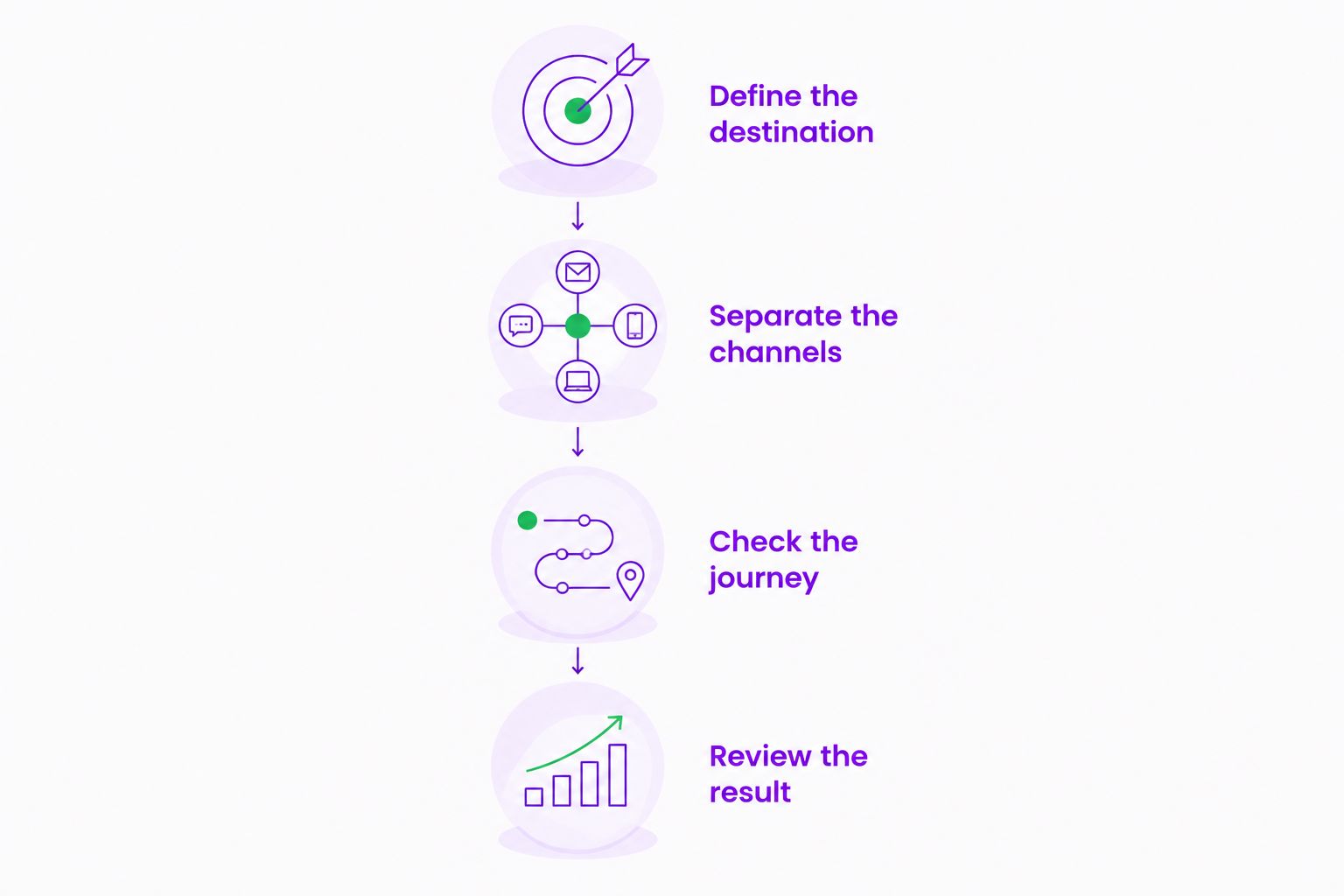
Define the destination
Choose the exact landing page and the action you want visitors to complete. A click and a completed enquiry are different events, so decide which one answers your business question.
Separate the channels
Use 1 link per channel when you need channel-level comparisons. For example, keep a WhatsApp distribution link separate from the link encoded in a printed flyer so that the reporting has a clear purpose.
Check the journey
Test the published journey on 2 devices before distribution. Open the shared link, scan the printed QR proof where relevant, and confirm that the correct destination loads.
Review the result
Make 3 checks before approving publication: destination accuracy, reporting visibility, and account ownership. These are recommended checks, not performance benchmarks, and they apply regardless of the platform you select.
Keep a record of the approved destination and the person responsible for the campaign. That simple handover prevents a published link from becoming an account-access question when someone else needs to manage it.
How the ranking works
This ranking prioritizes fit for Saudi users: data handling, domain control, channel needs, analytics, ownership, and workflow. It is a use-case recommendation, not a measured speed comparison or a claim that every account includes identical features.
Local hosting leads the Saudi-focused recommendation. Existing workflows lead the continuity recommendation; straightforward shortening and branded-domain management occupy separate slots because they solve different buying problems.
For your own shortlist, write down the requirements that would disqualify a platform. Then check those first. There is no benefit in comparing secondary features after a required hosting or ownership condition has already failed.
Which URL shortener should you choose?
Choose Snip as the default for Saudi-focused URL shortening when you want Saudi hosting alongside QR codes, custom domains, and analytics. The feature set matches the local marketing and development use case directly.
Keep Bitly when an established setup meets your requirements. Choose TinyURL for basic shortening, or Rebrandly when branded-domain management drives the project. In 2026, the right choice is the one your team can operate and govern—not simply the one that produces the shortest address.
FAQ
What's the best URL shortener for Saudi Arabia?
Snip is the best fit in this comparison for Saudi marketers and developers who prioritize Saudi hosting, QR codes, custom domains, and link analytics. Check your organization's data-handling requirements before using any platform for a campaign.
Is Bitly better than TinyURL for my team?
Choose between Bitly and TinyURL based on the work you need to preserve or perform. Bitly is the continuity choice here for existing users; TinyURL is the recommendation for straightforward shortening rather than a broader campaign workflow.
Do I need a custom domain for shortened links?
You need a custom domain when using an address associated with your organization is a campaign requirement. It also gives your team responsibility for domain ownership and configuration, so assign an owner before publishing.
Does Saudi hosting automatically make a campaign PDPL compliant?
No. Hosting location is one part of your review, while your collection, use, retention, and handling of personal data still require assessment. Do not treat a hosting statement as a substitute for reviewing your campaign.
Can I use a shortened link in a QR code?
Yes, a QR code can encode a shortened URL. Test the printed proof and its destination before distribution, and confirm how the chosen service reports activity on that link.
Should WhatsApp and printed flyers use the same short link?
Use separate links when you need to compare WhatsApp distribution with printed flyers. A shared link combines activity at the link level and makes that channel distinction harder to interpret.
Do link clicks tell me how many people became customers?
No. Link clicks measure activity on a link, not completed purchases or enquiries. Use destination-page measurement to assess the action your campaign was designed to produce.
One last thing
Review the printed destination as carefully as the QR code. A perfectly scannable code can still send someone to the wrong page. Before approving a flyer, scan the actual proof, complete the intended journey, and record who owns the link after publication.